Showing posts with label Schumann Robert. Show all posts

Monday, June 7, 2010

The Spotify Schumann Bicentennial Playlist

"Today it is more important for me to present material from a number of different aspects, to derive new properties from it, than to compose closed forms. To choose a historical example: Schumann, rather than Brahms." - Wolfgang Rihm

Robert Schumann was born 200 years ago tomorrow, he is the composer I love the most. Lieder like Du bist wie eine Blume is so hauntingly beautiful that it hurts, the tormented cello concerto is heartfelt romantic and deeply tragic at the same time, and no other composer writes piano music like Schumann. Chopin is the greatest dreamer in music, he brought the world most wonderful nocturnes, and preludes that lead to the beginning of nothing: they end before the beginning of the end even starts. Schumann is the most poetic daydreamer, only people who dream in daydreams can ever compose pieces with such an dreamy aura like Träumerei.

This playlist is my tribute to this great composer, and I hope it helps other Spotify users to explore Schumann's music. It consists of four parts:

1, The works with opus numbers. Schumann wrote almost exclusively for solo piano at the beginning, composed over one hundred lieder in his "year of songs"(1840), and many of his chamber music in 1842. So this part is quite easy to be divided into separate genres if you want to. This part is sorted by opus numbers. I tried to choose the best recording for the works that I'm familiar with, for the piano music alone we have Arrau, Anda, Kempff, Richter, and many other maestros. What a feast!

2, The works without opus number, alternative editions and arrangements. This including the violin concerto, some early fragments for piano and orchestra, the unfinished ”Zwickau" symphony, the cello concerto arranged for violin and re-orchestrated by Shostakovich, Carnaval orchestrated by Ravel, and Paganini's 24 Caprices for Violin with Schumann's piano accompaniment. According to the Cambridge Companion To Schumann,  it is the last works that Schumann finished in the asylum. The Concerto Without Orchestra played by Horowitz is majestic.

3, Historical performances. I only chose one modern recording for each composition, but there are some elder recordings that must be heard by true Schumann lovers too. This includes the 1951 live recording of the piano concerto from Cortot and Fricsay, the Frauenliebe sung by Elly Ameling, and a very rare Dichterliebe with Horowitz as accompanist.

4, Modern works that associated with Schumann: Wolfgang Rihm's piano trio Fremde Szenen, Kurtag's Hommage À R. Sch, Peter Ruzicka's Vier Fragmente über Schumann, Heinz Holliger's Gesänge Der Frühe and Romancendres, a "reconstruction" of Schumann's Cello Romances destroyed by Clara, and a suite of Luigi Nono's Prometeo, in which the beginning of Schumann's Manfred is quoted nine times.

In the end of the playlist I put the recording of four songs that were in the original version of Dichterliebe but later excluded. I can hardly think of a better closing track other than Mein Wagen rollet langsam.

Here's the Spotify playlist: Robert Schumann: Bicentennial Edition (1057 tracks, 2 days) Happy 200th Birthday Robert, may your songs always be sung.

If you want a quick introduction to Schumann's works, check out this 2-CD set by Deutsche Grammophon on Spotify: Schumann Gold

And here's an very interesting documentary on Youtube, Schumann's Lost Romance presented by Steven Isserlis:


Tuesday, May 25, 2010

EMI & Virgin Classics: May Highlights On Spotify

Click the images below to open the albums in Spotify. Check out more information at the official page on the EMI site.

Gustav Mahler - the Complete Works 150th Anniversary Edition
(Spotify Links: 16CDs Set, 2-CD Set of Adagios)


Mahler: Sympony No.2 "Resurrection"


Brahms: Piano Concerto No.2, Klavierstücke Op.76


Shhh! Nigel Kennedy Quintet feat. Boy George

Classical Legends - In their own words


100 Best Verdi

And "Robert Schumann - 200th Anniversary 4 themed collections comprising Schumann's greatest works." Spotify links: Lieder, Piano Music, Chamber Music, and Orchestral Works. I promise you that I'm going to post my own Schumann playlist on his 200th birthday next month.

Thank you EMI, for getting your new releases on Spotify so soon:)

Sunday, February 21, 2010

Johannes Brahms: Complete Works With Opus Numbers on Spotify Part 1

Johannes Brahms's letter to Clara Schumann: "Art is a republic. You should take that as a motto. You are far too aristocratic. . . . Do not place one artist in a higher rank and expect the others to regard him as their superior, as dictator. His gifts will make him a beloved and respected citizen of this republic, but will not make him consul or emperor."

Clara Schumann's reply: "It is true that I am often greatly struck by the richness of your genius, that you always seem to me one on whom heaven has poured out its best gifts, that I love and honor you for the sake of many glorious works. All this has fastened its roots deep down in my heart, so, dearest Johannes, do not trouble to kill it all by your cold philosophizing."

Robert Schumann's last words to Clara: "My... I know..." He was trying to say: "My Clara, I know you." He couldn't speak Clara's name since a suicide attempt two years before his death in an asylum, Clara and Brahms was with him during his final days.


I read some 200 pages of Jan Swafford's fascinating biography of Brahms while travelling during the holidays. Before this I never looked closely into the heartbreaking story of Brahms' relationship with Robert and Clara Schumann. It's such a sad thing to see beauty decay. It's sadder still, to see Brahms developed into a mature artist at the same time when Schumann's inspiration and health torn away. Brahms denied both Robert's prediction and Clara's love, meanwhile all his life he promoted Schumann's works and dedicated his chief muse Clara many masterpieces. What a total, um, what's the word, well, dude.

To coordinate with the reading, I'm in the process of making a chronicle playlist of Brahms' works. Here's part 1: Johannes Brahms: Op. 1-30

I included both the original 1854 version of the Piano Trio No.1, and the 1891 revised version. For the piano music, beside the modern recordings I also added in some historical recordings from Backhaus and Kempff, both were born while Brahms was alive and noted for their Brahms interpretation.

The Op. 9 Schumann Variations might be Brahms' most personal composition. In the tenth variation he used a Clara theme, which Schumann himself also used in his Impromptu. Brahms sent it to Schumann in the clinic. Schumann loved the music but couldn't remember that theme.

In the Swan Songs playlist there's Schumann's last composition, a set of variations for piano put down days before his collapse. Brahms wrote a subtle set of new variations on Schumann's theme for piano four-hand.

One last word for the String Sextet No.1 Op. 18, if I was going to make a "I've known Four Seasons, For Elise and Eine kleine Nachtmusik etc. Now what?" playlist, I'd definetely put the 2nd movement, the Andante in it.

Happy listening, and please stay tuned for part 2.

Sunday, January 3, 2010

Schumann: Piano Quintet And Other Chamber Works

"It is quite true that in man himself the world of the senses, whatever bitterness it may harbor, is made first and above all to enchant us with its sweetnesses and its joys."  -  Jacques Maritain

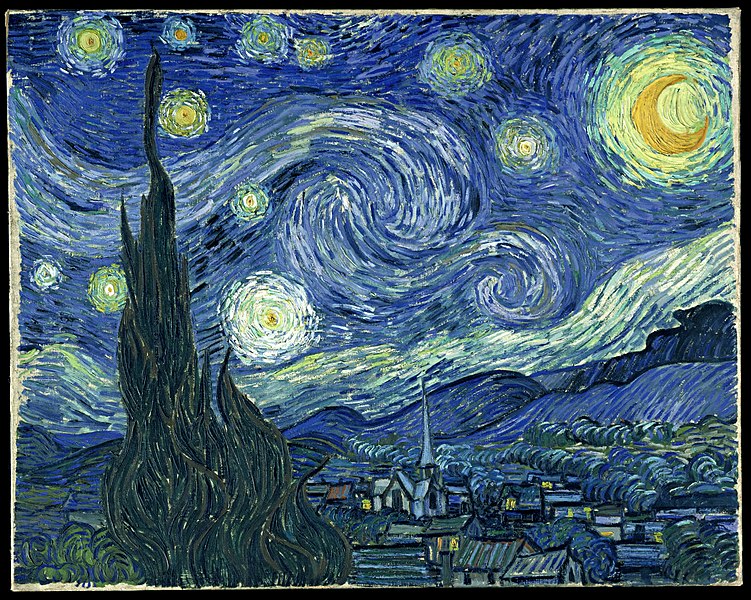
Schumann's chamber works holds a special place in my heart, especially the piano quintet in E-flat. Even at his wildest moment, Beethoven was perfectly sane. But for Schumann, even when he was totally enchanted by love, his crazy love still causes him fear and pain. Just listen to the heart-pounding opening bars of the second movement of Fantasy in C op.17, after the fist movement which is one of the most beautiful and passionate ode to love ever written, he suffers. Schumann never seemed to be able to get along with the angelic visions he pictured with his music, it's not a question of his faith or devotion, the insecurity was in his blood. That sense of insecurity made some of his most moving music heartrending, the piano in the final movement of the quintet shines like yellow stars in Starry Night. Van Gogh suffered from bipolar disorder too.


This is a gorgeous performance of the quintet form Martha and her friends:

Martha Argerich/Dora Schwarzberg/Lucia Hall/Nobuko Imai/Mischa Maisky/Marie-Luise Neunecker/Natalia Gutman/Alexandre Rabinovitch-Barakovsky – Schumann - Chamber Works

If you are not familiar with Schumann, try this first: Martha Argerich – Schumann: Scenes from Childhood, it's the Waltz For Debby in the Classical repertoire.

Happy new year and happy listening.