Showing posts with label French Composers. Show all posts

Tuesday, December 11, 2012

Darius Milhaud - Complete Chronological Collection

"Darius Milhaud was a French composer and teacher. He was a member of Les Six - also known as The Group of Six - and one of the most prolific composers of the 20th century. His compositions are influenced by jazz and make use of polytonality." - Wikipedia


"Stage Works


Darius Milhaud wrote a considerable amount of music for the theatre (operas, ballets and incidental music) as well as film and radio scores. Collaboration with Claudel brought the opera Christophe Colombe and incidental music for plays ranging from those of Shakespeare to the work of contemporaries such as Brecht, Supervielle, Giraudoux and Anouilh. With Cocteau he wrote the ballets Le Boeuf sur le Toit ('The Ox on the Roof') and the jazz La Création du Monde ('The Creation of the World'). These represent only a small fraction of his dramatic work.

Orchestral Music


Milhaud was equally prolific as a composer of orchestral music of all kinds, including 12 symphonies and a variety of concertos, some of which reflect the influence of his native Provence.

Vocal and Choral Music

Milhaud also contributed widely to the repertoire of French song. His settings (both choral and solo voice with piano) are of texts from a great variety of sources, including Rabindranath Tagore, André Gide, and the words of Pope John XXIII (the last in a choral symphony Pacem in terris). He contributed to Cocteau's Les Mariés de la tour Eiffel and, as a gesture, set to music an agricultural appliance catalogue. Other works reflect his Jewish background.

Chamber Music

Milhaud wrote 18 string quartets and provided useful additions to duo sonata repertoire, not least for the viola. His Quatre Visages of 1943 for viola and piano comprises musical representations of four different kinds of girls. For wind quintet he composed the charming suite La Cheminée du Roi René, and for oboe, clarinet and bassoon he wrote the attractive Pastorale. The works show his characteristically French adroitness in writing for woodwind instruments.

Piano Music

Two works in particular have proved attractive additions to repertoire. The first, Saudades do Brasil, a suite for piano, is based on music heard in Brazil during the composer’s stay there between 1916 and 1918. Scaramouche, arranged for two pianos from incidental music for Molière's Le Médécin volant, is a lively jeu d'esprit, in the spirit of the commedia dell'arte character of the title. La Muse ménagère ('The Domestic Muse') reflects the necessary wartime attempts at house-keeping by his actress wife." - Naxos

Get all available works in one Spotify playlist: Darius Milhaud - Complete Chronological Collection (664 tracks, total time: 37 hours). Ctrl (CMD) + G to browse in album view. Difference arrangements, like four version of Scaramouche, are also included. For a complete list of works see this Wikipedia page.

Milhaud's notable students include: Ben Johnston, Steve Reich, Iannis Xenakis, and Dave Brubeck.

Thursday, November 22, 2012

Paris 1200: Complete Works of Pérotin on Spotify

"Pérotin, French composer of sacred polyphonic music, who is believed to have introduced the composition of polyphony in four parts into Western music. Nothing is known of Pérotins life, and his identity is not clearly established. He worked probably at the Cathedral of Notre-Dame in Paris, and his compositions are considered to belong to the Notre-Dame, or Parisian, school, of which he and Léonin are the only members known by name.


Pérotin's four-part works were revolutionary, since religious music of the 12th century was almost entirely in the form of two-part organum (polyphony in which a plainchant melody is sung against another line of music). In Pérotin's organa the liturgical chant of the tenor is heard against not one voice but two or three voices that provide highly decorative vocalizations. He is known to have composed two four-part works, “Viderunt” and “Sederunt”; another four-part composition, “Mors,” is believed to be his. He also enlarged upon the Magnus liber organi, a collection of organa by his predecessor, Léonin, and made innovations in the use of rhythm. “Viderunt” and “Sederunt,” musical creations comparable in scope to the cathedrals of Gothic architecture, have both been recorded in modern performance. " - Britannica

 This playlists includes recordings for all known works of Pérotin, from over 20 excellent medieval music albums, featuring great vocal groups such as Anonymous 4, New York Polyphony and The Hilliard Ensemble; as well as arrangements played by Cygnus Ensemble and Kronos Quartet.

Get this collection in one Spotify playlist: Pérotin - Complete Works (22 tracks, 2 hours). Ctrl (CMD) + G to browse in album view.


Tuesday, April 3, 2012

Guillaume de Machaut: Complete Recordings on Spotify

Notre-Dame de Reims (Our Lady of Rheims)
Guillaume de Machaut (c. 1300 – 1377) was a Medieval French poet and composer. He is one of the earliest composers on whom significant biographical information is available.

According to Daniel Leech-Wilkinson, Machaut was "the last great poet who was also a composer". Well into the 15th century, Machaut's poetry was greatly admired and imitated by other poets, including Geoffrey Chaucer. - Wikipedia

Machaut is the first in the line of great composers; this playlist gathers all recordings of his works available on Spotify in one place. Machaut tracks from medieval music compilations (like Where Beauty Moves And Wit Delights) are put at the beginning. They are followed by albums feature only Machaut's works (loosely arranged by genre: Lais, Mass, Motets, etc.). The playlist ends with New York Polyphony's beautiful paraphrase of Ma fin est mon commencement (My end is my beginning) from 2012.

Get this collection in one Spotify playlist: Guillaume de Machaut: Complete Recordings on Spotify (415 tracks from more than 60 albums, total time: 26 hours). Ctrl (CMD) + G to browse in album view. More about Machaut on medieval.org, and more pictures of Reims Cathedral (where Machaut worked From 1338 until his death) here.

This brings the French Composer series to an end. Adieu.


Thursday, March 29, 2012

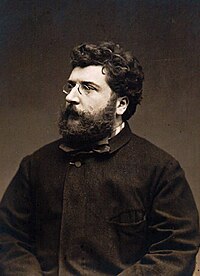
Georges Bizet: Complete Thematic Catalogue

"Known for one of the world's most popular operas, Carmen, Georges Bizet deserves attention as well for other works of remarkable melodic charm. Many of his works received cool receptions on their premieres but are now considered central to the repertory of classical music." - AllMusic


Works in this playlist:

Orchestral, piano and vocal works: Symphony in C (the very existence of this brilliant work was not known to the world until 1935, 60 years after Bizet's death), Overture in A, Roma Symphony, Petite suite, Overture Patrie, Vasco de Gama, Agnus Dei, Te Deum and cantata Clovis et Clotilde; L'Arlésienne (complete incidental music and suites); other suites from operas; various songs and piano works, including Variations Chromatiques and Jeux d'enfants (Children's Games).

Operas: Le docteur Miracle, Don Procopio, Ivan IV, Les pêcheurs de perles (The Pearl Fishers; both the amended and original versions), La jolie fille de Perth, Djamileh, Carmen (four versions performed with spoken dialogue as originally intended or with recitatives added by other composers; plus three tracks from a 1908 recording sang in German). Arranged in chronological order.

Get this collection in one Spotify playlist:  Georges Bizet: Complete Thematic Catalogue (460 tracks, total time 28 hours).  Ctrl (CMD) + G to browse in album view. In the Naxos Educational playlist you can find an audiobook introduction to Carmen.

A playlist for the greatest French Composer ever will be posted next week.


Monday, March 26, 2012

Pierre Boulez as Composer & Mahler Conductor

Two playlists to celebrate the 87th birthday of Pierre Boulez, French composer, conductor and winner of 26 Grammys. First one collects his compositions in reverse chronological order, with a brief and appropriate intro at the beginning: seven extracts of his most important works, from the DG compilation Pierre Boulez at 80: The Conductor and The Composer. Boulez often rework and expand earlier works dramatically; I included all the versions available on Spotify.


Works in this playlist includes (with dates of completion/revision):
Second playlist is the complete Mahler recordings Boulez made with DG, including the ten symphonies (plus an individual recording of Totenfeier from "Resurrection"), Das Lied and two albums of other songs; arranged in the order of composition date. I also put Boulez's only Bruckner recording to date, a monumental 8th, at the end.

Here are the Spotify playlists: Boulez as Composer: Reverse Chronological Collection With Intro (111 tracks, total time: 14 hours); Boulez Conducts Mahler & Bruckner (99 tracks, total time: 16 hours). Ctrl (CMD) + G to browse in album view.

Happy 87th birthday; still waiting for Godot.


Saturday, December 10, 2011

Olivier Messiaen: Complete Chronological Catalogue on Spotify

"A true music, that is to say, spiritual, a music which may be an act of faith; a music which may touch upon all subjects without ceasing to touch upon God; an original music, in short, whose language may open a few doors, take down some yet distant stars." - Olivier Messiaen, in the preface of his Technique de mon Langage Musical (Technique of my Musical Language)

Olivier Messiaen was a French composer, organist, teacher, and ornithologist whose music is distinguished by his deep devotion to Catholicism, exoticism, and nature. - AllMusic

On the fall of France in 1940, Messiaen was made a prisoner of war, during which time he composed his Quatuor pour la fin du temps ("Quartet for the end of time") for the four available instruments—piano, violin, cello and clarinet. It was first performed by Messiaen and fellow prisoners for an audience of inmates and prison guards.


He found birdsong fascinating, believed birds to be the greatest musicians, and considered himself as much an ornithologist as a composer. He notated bird songs worldwide and incorporated birdsong transcriptions into most of his music. His innovative use of colour, his conception of the relationship between time and music, his use of birdsong and his desire to express religious ideas are among features that make Messiaen's music distinctive. - Wikipedia

Here's the Spotify playlist: Olivier Messiaen: Complete Chronological Catalogue (357 tracks from more than 60 albums, total time: 36 hours) Ctrl (CMD)+G to browse in album view. Méditations sur le mystère de la Sainte Trinité in this playlist was recorded on the organ of Trinité Church, where Messiaen served as organist for 61 years. You can also hear the composer plays the piano in Poèmes pour Mi in the previous playlist Composer As Pianist. For newbies, try 4 Etudes de rythme, Zion Park et la cité céleste, Quartet For The End Of Time and Vingt Regards Sur L'enfant Jesus first.

Messiaen is Elliott Carter's senior by one day, happy 103rd birthday too.

Below is a list of works in this playlist, including English translation for the original French titles. All works are linked to introductory articles.


Wednesday, November 16, 2011

Josquin des Prez: A Spotify Playlist

Josquin des Prez (c. 1450 to 1455 –1521), often referred to simply as Josquin, was a Franco-Flemish composer of the Renaissance. He was the most famous European composer between Guillaume Dufay and Palestrina, and is usually considered to be the central figure of the Franco-Flemish School. Josquin is widely considered by music scholars to be the first master of the high Renaissance style of polyphonic vocal music that was emerging during his lifetime. - Wikipedia

Spotify launched in Belgium and Switzerland today, on this occasion I did a playlist for the greatest sixteenth century composer Josquin, who was (probably) born in Hainaut, Belgium. This playlist includes all the decent recordings of Josquin's works on Spotify, sorted by genres: masses, motets, chansons and instrumental compositions. Most recordings of the masses also have some motets or others works in it, and I kept the full albums. So this playlist starts with Josquin's most famous work Ave Maria ... virgo serena ("The whole 'perfected art' of sixteenth century sacred music, it sometimes seems, was formed on the example ofthis one supreme masterpieces - Richard Taruskin). At the end of the playlist there are two laments on Josquin's death by his contemporaries: Jheronimus Vinders's O mors inevitabilis and Nicolas Gombert's Musae Jovis, and two wonderful transcriptions  by Charles Wuorinen: Ave Christe for piano and Josquiniana for string quartet.

Here's the Spotify playlist: Josquin des Prez: Complete Works (322 tracks, total time: 21 hours) Ctrl (CMD)+G to browse in album view.


Monday, November 7, 2011

Gabriel Fauré: Complete Works on Spotify

"It has been said that my Requiem does not express the fear of death and someone has called it a lullaby of death. But it is thus that I see death: as a happy deliverance, an aspiration towards happiness above, rather than as a painful experience. The music of Gounod has been criticized for its overinclination towards human tenderness. But his nature predisposed him to feel this way: religious emotion took this form inside him. Is it not necessary to accept the artist's nature? As to my Requiem, perhaps I have also instinctively sought to escape from what is thought right and proper, after all the years of accompanying burial services on the organ! I know it all by heart. I wanted to write something different." Gabriel Fauré on his Requiem.

Faure with wife, playing a reconstructed Babylonian harp, March 1883
Copland called Fauré "the Brahms of France", but personally I prefer Fauré. His music, especially the late chamber works since the cello sonatas, written when he was almost completely deaf, often maintains a subtle balance between form and expression, and rarely suffers from sudden outbursts of excessive romantic sensibilities underneath the solemn surface (like those light-your-lighter moments in Brhams).

This playlist collects Fauré's Opus 1-121 (sorted by numbers), plus Messe basse and opera Pénélope (inserted to their approximate chronological positions). It also includes both the 1893 version (Accentus, Naive) and full orchestral version (The Sixteen, Coro) of the Requiem; two versions of the great song cycle La bonne chanson (with/without string quintet); piano and orchestraal versions of Op.19 Ballade and Dolly suite; Masques et bergamasque as orchestral suite and eight-movement suite with tenor and choir; and, choral/orchestral versions of the popular Pavane.

Here's the Spotify playlist: Gabriel Fauré: Complete Works (304 tracks, total time: 21 hours) All tracks are available on Spotify USA. Ctrl (CMD)+G to browse in album view. See list of works here.


Thursday, November 3, 2011

Jean-Baptiste Lully: Thematic Catalogue on Spotify

"Authority is what French music was all about, and Lully's operas above all. They were the courtiest court operas that ever were." - Richard Taruskin, Oxford History of Western Music

Jean-Baptiste de Lully (1632–1687) was an Italian-born French composer who spent most of his life working in the court of the Sun King. He was the principal architect of what became known as the French Baroque style. His music is known for its power, liveliness in its fast movements and its deep emotional character in its sad movements. Lully might be one of the very few musicians that literally died from their craft: at 55 he accidentally stabbed his own foot with the long conducting stick he used to beat time and died from an infection.

Lully and the librettist Philippe Quinault
List of recordings in this playlist: Part 1, Introductions to Lully, orchestral suites, ballets and instrumental music (linked to reviews):

William Christie – Lully: Great Operatic Scenes
Chorégraphie: Music for Louis XIV's dancing masters
Les musiques de Louis XIV Vol.2: Du ballet à l'opéra
Mary Enid Haines – Lully: Ballet Music For The Sun King, booklet
Raymond Leppard & ECO– Lully: Pièces de symphonie
Jordi Savall – Lully: L'Orchestre Du Roi Soleil
Chicago Baroque Ensemble – The World Of Lully
Capriccio Stravagante – Lully: Divertissements
Fabio Bonizzoni – Lully: Ballets & Recits Italiens
The London Oboe Band – Ballet And Theater Music For Oboe Band
Others

Part 2, Opera/Stage Works

Le Bourgeois gentilhomme (1670); Les Fêtes De L'Amour Et De Bacchus (1672); Thésée (1675) reviews; Psyché (1678) reviews; Bellérophon (1679) reviews; Proserpine (1680) reviews 1, 2; Le triomphe de l'amour (1681); Phaëton (1683) review; Amadis (1684) review; Roland (1685) reviews 1, 2, 3; Armide (1686) reviews; Acis et Galatée (1686) reviews

Part 3, Sacred Music (linked to reviews)

Le Concert Spirituel – Lully: Grand Motets, Vol. 1,Vol. 2, Vol. 3
Jean-François Paillard– Lully : Te Deum & Dies Irae

Here's the Spotify playlist: Jean-Baptiste Lully: Thematic Catalogue (1027 tracks, total time: 1 day) Ctrl (CMD)+G to browse in album view. Two piano transcriptions from Leopold Godowsky bookends this playlist.


Wednesday, November 2, 2011

François Couperin: Thematic Catalogue on Spotify

From Wikipedia: François Couperin (1668 –1733) was a French Baroque composer, organist and harpsichordist. He was known as Couperin le Grand ("Couperin the Great") to distinguish him from other members of the musically talented Couperin family.

This playlist includes his complete works for harpsichord, organ, chamber music, sacred and secular vocal compositions, sorted by genre. See list of works here. I used Olivier Baumont's Erato recording of the complete harpsichord works, and Complete Chamber Music on Brilliant, as the draft of the playlist, then I replaced individual works with other excellent recordings that I could find on Spotify. Therefore, this playlist offers plenty of choices, and it's easier to tell different installments from each other when browsing in Album View.  After the vocal works, I also put three track from other members of the Couperin family at the end of the playlist. One from Armand-Louis Couperin, two pieces by Louis Couperin: an allemande played on a harpsichord built in 1658; Pavanne in F-Sharp from Richard Egarr's new complete set of L.Couperin's harpsichord works.

Here's the Spotify playlist: François Couperin: Thematic Catalogue (655 tracks, total time: 1 day) Ctrl (CMD)+G to browse in album view.


Tuesday, November 1, 2011

Jean-Philippe Rameau: Thematic Catalogue

"Before Rameau (1683–1764) there was instrumentation; after Rameau, there was orchestration." - An Amazon reviewer.

Jean-Philippe Rameau was one of the most important French composers and music theorists of the Baroque era. This playlist is sorted by music genres, after Rameau Catalogue Thématique established by Sylvie Bouissou and Denis Herlin. It includes all the harpsichord works (over a dozen different recordings), cantatas, operas (unfortunately, many recordings are not available on Spotify USA) and suites that I found on Spotify. I also put Marc Minkowski's Symphonie imaginaire at the beginning of the playlist (a great introduction for classical fans who are not familiar with Rameau or French opera) and a recording of Rameau organ transcriptions at the end.

Here's the Spotify playlist: Rameau Catalogue Thématique (734 tracks, total time: 1 day) Ctrl (CMD)+G to browse in album view. Leopold Godowsky's Rameau arrangements can be found in my previous Piano Transcriptions playlist.


Monday, October 31, 2011

Camille Saint-Saëns: Complete Works with Opus Number & A Little More

"He knows everything, but lacks inexperience." - Berlioz on Saint-Saëns.

This playlist covers Saint-Saëns's exceedingly long career, from 1851 to 1921. When he wrote his first symphony at 16, Chopin and Mendelssohn were still in their prime, by the time he composed his final work in 1921, Irving Berlin was writing All By Myself for jazz singers and Edgard Varèse had finished Amériques. The music world changed thoroughly, more than once, during Saint-Saëns's lifetime, but it's almost impossible to find any trace of those changes in his music. Maybe conservatism lifted Saint-Saëns from the ranks of greatest composers, but if you are tired of music that are rooted in existential angst, he is a perfect composer for you. In his best works, like the delightful piano concertos, he proves that perfect form and superlative craftsmanship can produce wonderful music without philosophy.

I compiled a playlist for his Opus 1-169, after this Wikipedia page. It also includes important works without opus number, like the two unnumbered symphonies and arguably his most famous work, The Carnival of the Animals, which was not published in full until after his death – reportedly because Saint-Saëns feared it would affect his reputation as a serious composer. The two symphonies are very enjoyable, a Mozartean elegance runs throughout the first one, and Symphony "Urbs Roma" is powered with a Schumannesque impulse, which can hardly be found in Saint-Saëns's mature works.

Here's the Spotify playlist: Camille Saint-Saëns: Complete Works with Opus Number (329 tracks, total time: 1 day). Works without opus number are integrated in their chronological places, so the whole playlist is in chronological order. Ctrl (CMD)+G to browse in album view. All tracks are available on Spotify UK, and all but a few minor works are available on Spotify USA.


Friday, October 28, 2011

Hector Berlioz: Complete Chronological Catalogue

"With all his efforts to go stark mad he never once succeeds." - The well-tempered Mendelssohn on Hector Berlioz. Sounds mad, doesn't it? Here's more. Verdi: "(Berlioz) lacked the calm and what I may call the balance that produce complete works of art. He always went to extremes, even when he was doing admirable things." And Boulez: "There are awkward harmonies in Berlioz that make one scream."

The most extraordinary thing about those comments is, none of the commenters, and few music critics today deny Berlioz's greatness. Though Stravinsky said "Berlioz's reputation as an orchestrator has always seemed highly suspect to me", what Berlioz did for orchestration is probably as revolutionary as Stravinsky did for rhythm. Read extracts from Treatise on Instrumentation and Orchestration here, or get a free eBook on Google Books.

I guess part of the reason that Berlioz didn't enjoy a steady reputation in the music history is, not many historians before the age of gramophone had a chance to hear the real thing. Almost alone among major composers, Berlioz had virtually no keyboard skills, and produced no piano or chamber music that was increasingly demanded by the rising bourgeois (it was from Liszt's piano transcription of Symphonie Fantastique that most people got to know the work, even Schumann reviewed the work based on it). The only instrument that he played well was, well, the orchestra. Some of his important works call for huge orchestra forces, even by today's standard. As a result, his magnum opus Les Troyens was never staged in its entirety during his lifetime. In fact, the first production that "approximated the composer's original intentions" appeared as late as 1957. His Messe solennelle, completed when he was 20, is on par with the best works that a 20-year-old Mozart had done. And this work was not published or performed between 1827 and 1993. I doubt many music history books ever mentioned it.

I compiled a playlist after this chronological list (itself was after the Catalogue of the Works of Hector Berlioz by D. Kern Holoman). Gardiner's Messe solennelle is not available on Spotify USA, so I have to use another recording which sounds much less impressive. European users can find the Gardiner recording through the revised version of the Resurrexit, placed after La mort d'Orphée. Both Weimar and Paris version of Benvenuto Cellini are included. For the Requiem, I used the legendary live recording from Beecham's final Royal Albert Hall concert. Also check out the new recording from Paul Mccreesh for a sonically spectacular performance.

Here's the Spotify playlist: Hector Berlioz: Complete Chronological Catalogue (422 tracks, total time: 1day). Press Ctrl (CMD)+G to browse in album view.

And, PBS is now offering full-length streaming of Keeping Score, watch Michael Tilson Thomas telling the story of Symphonie Fantastique here. His autobiography Memoirs of Hector Berlioz is also a great read (French version is free on Kindle), but beware, don't take his own words for granted. Berlioz wrote that he composed March to the Scaffold in one night (p.104). Well, he surely did, because he just copied it out from his unfinished work, Les francs-juges.


Wednesday, October 26, 2011

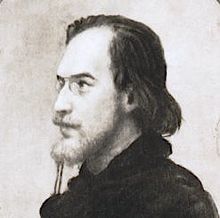
Erik Satie: Complete Chronological Catalogue

"I admire you: are you not the Great Stravinsky? I am but little Erik Satie." - Erik Satie, the measurer of sounds.

"You know your obsession for lists is approaching the realm of pathology when you starts to chronologize the works of Erik Satie" - This blogger, the maker of playlists.

Back in the time of CDs I used to own one Satie album, The Magic of Satie by French pianist Jean-Yves Thibaudet. Though it was one of my most played CDs, I never explored  more of his music, mainly because I thought he didn't write much else. Now, thanks to Spotify, I found that he produced more than 12 hours of music! Not including the 18-hour long Vexations.

I compiled a playlist after the chronological list on this Satie site, and included all the quality performances I could find on Spotify. The final result is a combination of no less than three dozens of Satie recordings. For the most famous piece Gymnopédies, I used a unusual interpretation by Reinbert de Leeuw, which lasts more than 16 minutes. I also included Debussy's orchestration of Gymnopédies No.1 & 3 (he thought the 2nd one did not lend itself to orchestration), and an orchestral version of Gymnopédie No.2 (it was wrongly assigned to Debussy on Naxos). Both the orchestral and piano version of Socrate are included.

Here's the Spotify playlist: Erik Satie: Complete Chronological Catalogue (302 tracks, total time: 12 hours) Press Ctrl (CMD)+G to browse in album view. Many tracks are currently unavailable on Spotify USA, still it works as a list of quality Satie recordings on Spotify.


Monday, October 24, 2011

Igor Stravinsky: Complete Chronological Catalogue

Ladies and gentlemen, please welcome the Pablo Picasso of classical music. The lord of dance of the 1910s avant-garde. The guy who forced modernism into bed with Russian folk tunes. Who donned a face like a mask from Tarantino films in the 1920s, and indulged in a peculiar obsession with pianola. Who emerged to find Uncle Sam. Who was written off as a has-been by the end of the 1940s, and who suddenly shifted gears to serialism and composed some of the strongest music of his career beginning in the mid 1950s. Ladies and gentlemen — Columbia recording artist Igor Stravinsky.

I made up the above parody from the introduction for Bob Dylan, who happens to be on the same label with Stravinsky. Somehow, the scene that Saint-Saëns famously stormed out of the premiere of The Rite of Spring always reminds me of another incident at 1965's Newport folk festival, in which Pete Seeger almost chopped Dylan's microphone cables, had he find an axe.

A few things about the playlist. 1, It is after the chronological list on IMSLP, from 1902's Storm Cloud, to 1966's Requiem Canticles. Most works are available on Spotify, except for a few early works and miniatures. I've noticed the IMSLP list missed Mass (1948), please leave a comment if you find other works left out. 2, Stravinsky revised many early works, all different versions of important works are included here, as well as suites from the ballets, arranged by the composer. For The Firebird I used Stravinsky's recording of the original 1910 ballet, and three concert suites (1911, 1919 and 1945) conducted by Boulez (Sony called it Suite 1910) Bernstein and Chailly respectively. For Rite of Spring, I used Pierre Monteux's RCA recording of the original 1913 version (he also conducted the premiere of the work), and Ferenc Fricsay's DG recording of the revised 1947 version. Unfortunately Richard Craft's new Naxos recording of the 1967 edition (not really a revision) is not on Spotify yet. For Symphony of Psalms, I used two recordings by Stravinsky, one is the first ever recording of this work, recorded two months after its world premiere (from the EMI booklet: "The choir, throaty, full-blooded, darkly, inwardly passionate, sing with liturgical conviction and intensity in a memorable performance."), another is the 1960s Columbia studio recording of the revised 1948 version. 3, I used the recordings that are available on both side of the pond when possible.

Here's the Spotify playlist: Igor Stravinsky: Complete Chronological Catalogue (577 tracks, total time: 1 day) Press Ctrl (CMD)+G to browse in album view. Also check out this excellent Naxos audiobook about The Rite on Spotify. I wanted to recommend the 22-CD Stravinsky box-set to those who still buy CDs, then I found it's sold out. Well I'm glad that I got mine in time, and I'm even more glad that now I have Spotify. Enjoy.

Note: the picture above is from Stravinsky Foundation. For even more expressive portraits of him (and Marlene Dietrich), see corner portraits.


Friday, October 21, 2011

Maurice Ravel: Complete Chronological Catalogue

See this Wikipedia page for a list of compositions by Maurice Ravel, another French impressionism master, melodist and orchestrator of the highest order. The compositions are arranged by the catalogue numbers which were assigned by the musicologist Marcel Marnat according to their dates of composition.

I compiled a playlist accordingly. Just like the Debussy playlist, it features a dazzling series of pianists: Gieseking, Michelangeli, Argerich, Pogorelich and, my favourite interpreter of Ravel's piano works: Abbey Simon. For Boléro I used Boulez's 1970s recording on Sony. Others may prefer Munch's famous 1956 recording on RCA-Victor Living Stereo, but it sounds too fast to me. According to Ravel, it runs about 17 minutes when played at correct tempo. Boulez brought out the fierce quality in this deceptively straightforward piece, and his timing is almost identical to Ravel's own. In playlists like this, one of my main aims is to offer a list of great recordings of a particular composer, I recommend serious listeners to listen to the full albums, not just the playlists themselves. 

Here's the Spotify playlist: Maurice Ravel: Complete Chronological Catalogue (183 tracks, total time: 13 hours) All tracks are available on Spotify UK and USA. Press Ctrl (CMD)+G to browse in album view. More on Spotify: a new Music and Arts album of historic recordings conducted, supervised or approved by the composer, and a Naxos Classical Explained audiobook on Boléro and Mother Goose.

Over the next few days or weeks I will be posting a series of French composer playlists, and (warning: shameless teaser follows) the last one will be the greatest French composer of all time.

By the way, to help new visitors browsing, I added a drop-down menu for the site. Please take a look, your feedback is much appreciated.


Wednesday, October 19, 2011

Claude Debussy: Complete Works by Lesure Numbers

This is a list of compositions by French impressionist composer Claude Debussy, organized in chronological order, created by musicologist François Lesure in 1977. The catalogue was necessary because Debussy did not use opus numbers, except for his String Quartet (labeled Op.10).

I compiled a playlist according to the Lesure catalog, featuring some of the best recordings on Spotify: Uchida's Etudes, Michelangeli's Images, Zimmerman's Préludes, and Boulez's Pelléas et Mélisande (it's not available on Spotify USA, so I added another Naxos recording). The playlist starts a bit slow, the first indisputable masterpiece, the String Quartet, appears in the middle of the whole program, after dozens of songs and other miniatures (quite a few gems in those early works, like the charming Beau soir, encore favourite Fantoches, and the Prix de Rome pieces). After that, it's basically a cluster of monumental works.

Here's the Spotify playlist: Claude Debussy: Complete Works by Lesure Numbers (306 tracks, total time: 1 day) Press Ctrl (CMD)+G to browse in album view. Set it on random for Radio Debussy.

Debussy once said: "Music is a mysterious mathematical process whose elements are part of Infinity. ... There is nothing more musical than a sunset. " If you are new to this great composer, start from this wonderful compilation: Debussy at Dawn (judging by the mood of the album, it really be should titled Debussy at Dusk), also check out the audiobook that explains Pelléas et Mélisande in this Naxos playlist, and the Composer As Pianist playlist for historical recordings of Debussy plays Debussy. Lastly, Claude Debussy vs. Ricky Gervais.